The Impact of Climate Change on Global Agriculture: A Growing Concern
The Impact of Climate Change on Global Agriculture: A Growing Concern
Climate change is having a profound impact on global agriculture, with effects ranging from crop yield losses to altered growing seasons. As the world's population continues to grow, the demand for food is increasing, making it imperative to understand the implications of climate change on agricultural production and food security.
The World Meteorological Organization (WMO) has warned that climate change is likely to lead to a 2-5% decrease in global crop yields by 2050, with some regions experiencing even more severe losses. According to a report by the Intergovernmental Panel on Climate Change (IPCC), climate change is projected to reduce crop yields by 10-30% in some parts of Africa, Asia, and Latin America by 2050. These changes will have significant implications for food prices, availability, and access, particularly for vulnerable populations.
Causes and Effects of Climate Change on Agriculture
Climate change is affecting agriculture in several ways:
Increasing Temperatures:
• Rising temperatures are causing heat stress in crops, leading to reduced yields and lower quality crops.
• Warmer temperatures also increase evapotranspiration, reducing soil moisture and exacerbating drought conditions.
Changing Rainfall Patterns:
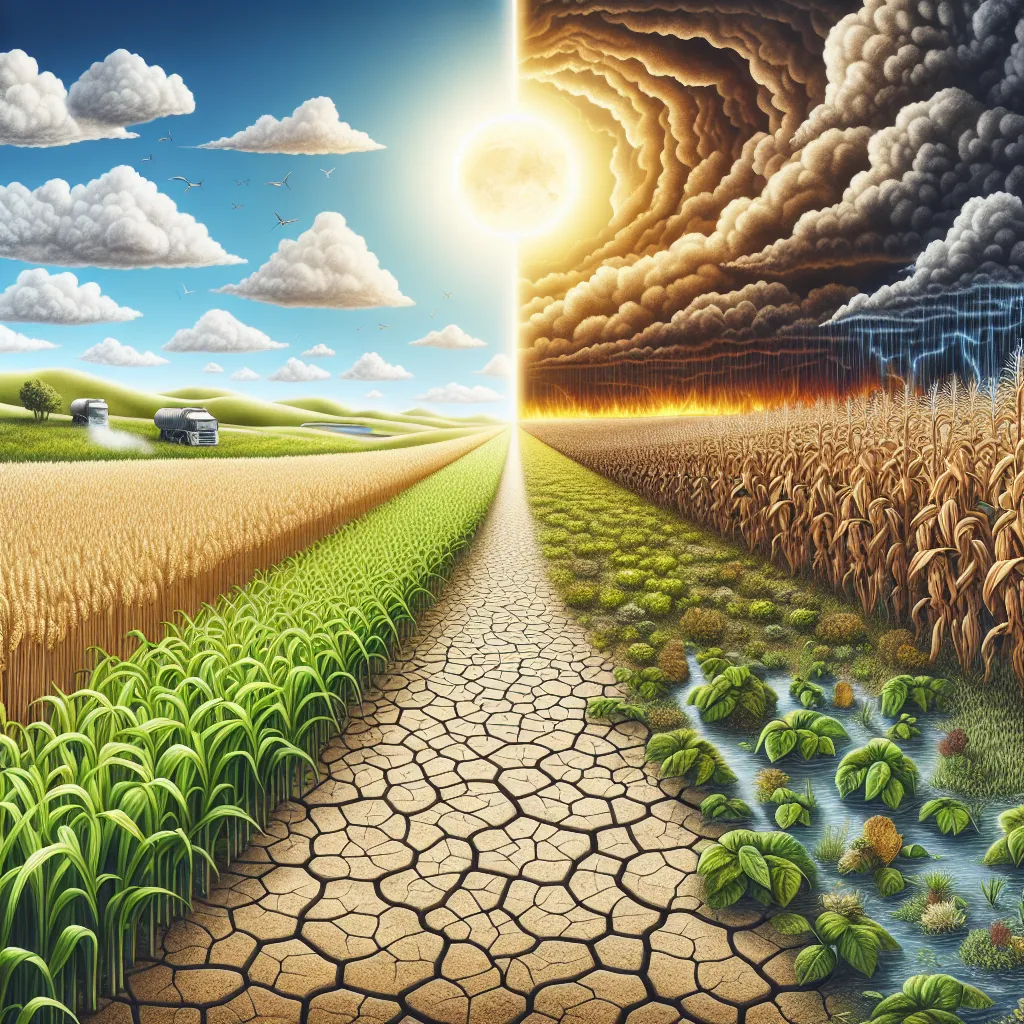
• Climate change is altering the distribution and frequency of precipitation events, leading to more frequent and severe droughts and floods.
• Shifts in growing seasons and altered rainfall patterns are disrupting planting and harvesting schedules, further reducing crop yields.
Affected Regions:
• Africa, where climate change is projected to reduce crop yields by 15-20% by 2050.
• Asia, where rice production is expected to decline due to warmer temperatures and altered rainfall patterns.
• Latin America, where climate change is projected to reduce coffee yields due to changing temperature and rainfall patterns.
Implications for Food Security
Climate change is not only affecting crop yields, but also the livelihoods of small-scale farmers, who are often the most vulnerable to changes in weather patterns:
• Climate change is projected to displace over 143 million people globally by 2050, with many of these people relying on agriculture for their livelihoods.
• The World Food Programme (WFP) estimates that 20% of the world's population, or over 1.4 billion people, will be food insecure by 2050 due to climate change.
Examples of Climate-Related Disasters in Agriculture
Recent examples of climate-related disasters in agriculture include:
Drought in California, USA (2012-2016)
* A 4-year drought reduced California almond yields by 50%, resulting in a $1 billion loss to the industry.
* The drought also disproportionately affected low-income farmworkers and small-scale farmers, who rely heavily on groundwater for irrigation.
Heat Wave in Europe (2018)
* A heat wave in Europe reduced wheat yields by 10-20% and decreased quality, leading to an estimated $1.4 billion loss to the industry.
* The heat wave also affected the livelihoods of small-scale farmers and farmworkers in countries such as France, Germany, and Poland.
Adaptation and Resilience Strategies
Although the effects of climate change on agriculture are already being felt, there are strategies that farmers, policymakers, and researchers can employ to adapt and build resilience:
• Climate-Smart Agriculture: involves the use of climate-resilient crop and animal varieties, agroforestry, and conservation agriculture.
• Soil Conservation: techniques such as contour farming and terracing can reduce erosion and retain soil moisture.
• Weather-Based Insurance: programs that provide insurance to farmers based on weather-related losses can reduce financial risks and improve livelihoods.
International Cooperation and Policy Actions
Global cooperation and policy actions are essential to addressing the challenge of climate change on agriculture:
• Nationally Determined Contributions (NDCs): countries must commit to reducing greenhouse gas emissions through NDCs, which must be aligned with the Paris Agreement.
• Agriculture in the Paris Agreement: the agreement recognizes the importance of agriculture in mitigating climate change and improving food security.
• Climate Information and Early Warning Systems (CI-EWS): access to reliable and timely climate information can help farmers plan for climate-related disasters.
Conclusion:
Climate change is having a profound impact on global agriculture, with far-reaching implications for food security, livelihoods, and sustainable development. By understanding the causes and effects of climate change on agriculture, policymakers, researchers, and farmers can work together to adapt and build resilience, ensuring the long-term sustainability of agriculture and food systems.
Sources:
* IPCC (2014). Climate Change 2014: Impacts, Vulnerability, and Adaptation. Part A: Global and Sectoral Aspects. Contribution of Working Group II to the Fifth Assessment Report of the Intergovernmental Panel on Climate Change.
* WMO (2016). Climate Change and Agriculture.
* WFP (2015). Food and Climate Change: Bio-Economic Computations and their Use in Agriculture.
* WRAP (2013). Climate Change and Agriculture: An Overview.
Related Post

Shockwave of Justice: Exploring Mugshots Volusia County

Meet Jackson Hinkle: The Rising Star in American Politics

The Shocking Truth About Our Zodiacs: How Astrology Reveals Hidden Personality Traits and Behaviors

Unlock the Power of Facebook Marketplace in Joplin, MO: A Guide to Buying and Selling with Confidence


