I Got A Guy For That: The Rise of Gig Economy Freelancers
I Got A Guy For That: The Rise of Gig Economy Freelancers
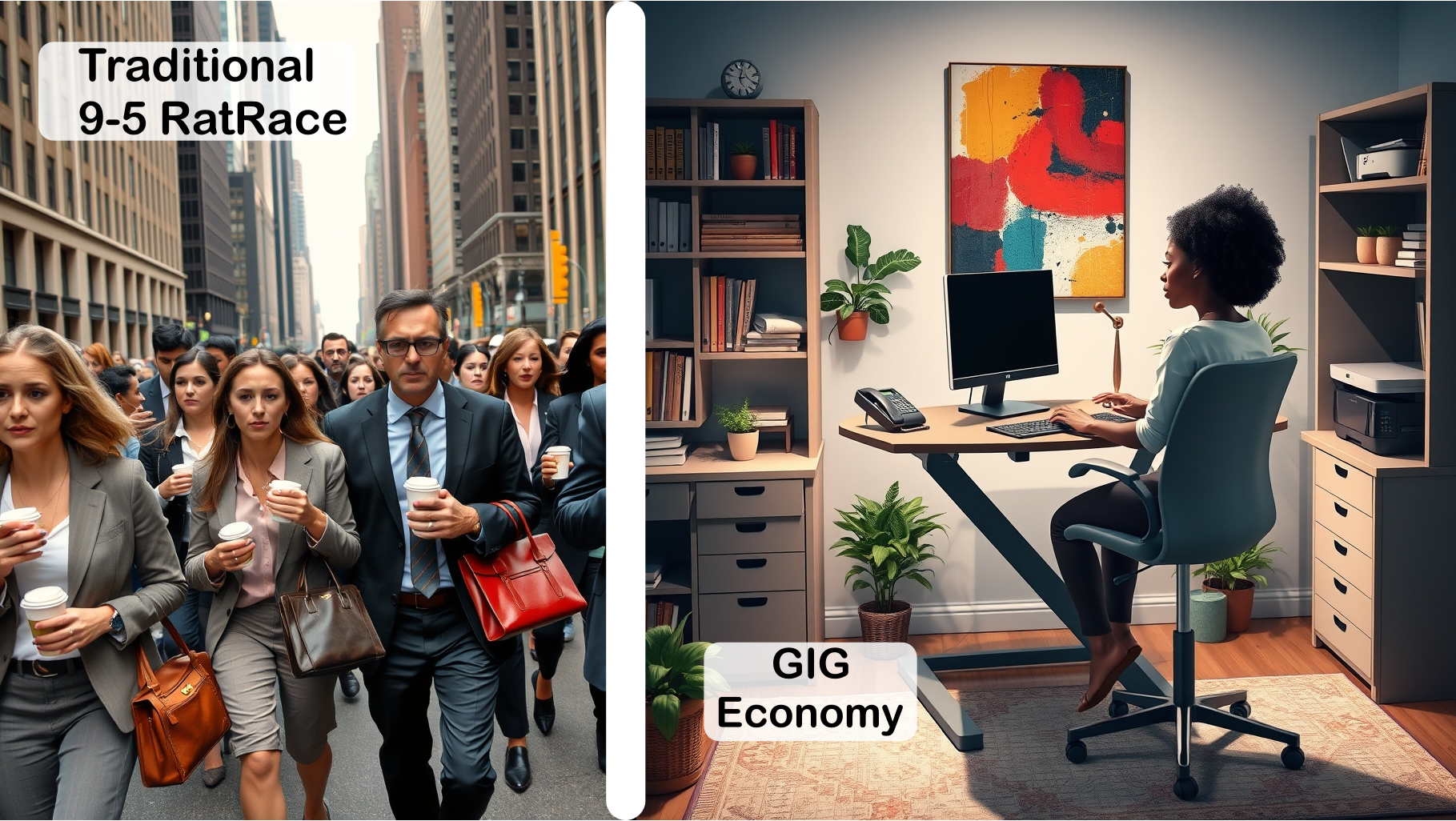
The gig economy has been booming in recent years, with millions of people turning to freelance work to make a living. These individuals, often referred to as "gig economy freelancers," are leveraging online platforms and their own skills to secure short-term jobs and projects. However, they are also facing unique challenges and uncertainties in their work lives. This article takes a closer look at the world of gig economy freelancers, exploring the opportunities and drawbacks of this emerging trend.
A recent report by Upwork, a leading freelance platform, found that by 2027, 43% of the U.S. workforce will be freelancers. This shift towards flexible, project-based work is driven by advances in technology, changes in the global economy, and a growing preference among workers for more autonomy and work-life balance. At the heart of this trend are freelancers like Jennifer, a 35-year-old writer and editor who got her start in the gig economy five years ago.
"I was looking for a way to make a living that would allow me to set my own schedule and work with a variety of clients," Jennifer said in an interview. "I love the freedom that comes with freelancing, but it can also be unpredictable and isolating at times."
Despite these challenges, many freelancers have found success in the gig economy. According to a report by Freelancers Union, 57% of freelancers earn more than they did when they were employed full-time, and 50% have increased their earnings by 25% or more since transitioning to freelance work. However, this increased earning potential comes with a host of other costs and uncertainties.
One of the biggest challenges faced by gig economy freelancers is the lack of job security and benefits typical of traditional employment. Without access to health insurance, retirement savings, or paid time off, freelancers must rely on their own resources and planning to manage these essential aspects of their lives. Additionally, the prevalence of temporary and contract work can lead to feelings of insecurity and anxiety about meeting income and financial goals.
Hiring platforms like Upwork and Freelancer have successfully leveraged technology to connect clients with highly skilled freelancers from around the world. These platforms provide a range of services, including project management tools, payment protection, and client reviews. However, the growth of these platforms has also raised concerns about worker exploitation and the erosion of traditional employment protections.
Key Statistics about Gig Economy Freelancers:
* 58% of gig economy workers are younger than 40. (Source: Upwork)
* 65% of freelancers say they have increased their income since transitioning to freelance work. (Source: Freelancers Union)
* The five most in-demand skills in the gig economy are writing, design, programming, marketing, and customer service. (Source: Upwork)
* 78% of freelancers report feeling confident about their ability to find new clients and projects. (Source: Freelancers Union)
Freelancers like Jennifer are highly adaptable and skilled, with the ability to navigate a range of platforms, negotiate complex client relationships, and adapt to shifting project demands.
The Benefits of the Gig Economy
Despite the challenges, many freelancers like Jennifer have found the gig economy to be a liberating and fulfilling way to work. Some benefits of freelance work include:
* **Flexibility** and autonomy in scheduling and projects
* **Unlimited earning potential** based on individual skills and experience
* **Opportunities for professional growth and specialization**
* **Networking and collaboration with clients and fellow freelancers**
Moreover, freelancers have the freedom to choose projects based on their interests, values, and availability.
Freelancing comes with many benefits but also carries risks.
Challenges and Risks of the Gig Economy
While freelancing offers many benefits, it also presents unique challenges and risks, including:
* **Financial uncertainty** and unpredictability
* **Obtaining benefits and job security** typical of traditional employment
* **Physical and mental health risks** resulting from isolation and lack of structures
* **Networking and self-promotion** challenges in securing client relationships
In addition to these challenges, some freelancers have raised concerns about the increasing digital divide between gig workers and less-skilled counterparts.
Strategies for Success in the Gig Economy
To succeed in the gig economy, developers should prioritize adaptability, networks, scalable skills, side jobs, and emotional stability. Key strategies for freelancers include:
* **Developing multiple income streams** by leveraging platforms, auxiliary businesses, or developing new skills
* **Paying attention to work-life balance** to avoid burnout and improve mental and physical health
* **Actively networking and seeking collaborations** with fellow freelancers and potential clients
* **Staying adaptable and open to opportunities** for growth and learning
By leveraging platforms and networks, freelancers can overcome common challenges like a quarter-life crisis, negative online reviews, and working flexible times.
Advances in Technology and the Future of Freelance Work
Advances in technology and AI will likely shape the future of freelance work. According to a report by McKinsey, AI-driven platforms could see industry growth rise to 80% in the next three years. However, this growth also presents potential challenges for human workers and fosters discussions among providers, planners, and politicians.
As the gig economy continues to evolve and grow, policymakers and employers must adapt to these changes and prioritize worker protections and benefits. By understanding the benefits and challenges of the gig economy, workers like Jennifer can navigate this emerging trend and build successful careers and lives.
In conclusion, the gig economy is a rapidly evolving, multifaceted phenomenon that underscores the changing nature of work, its advantages and demerits. As technology and the global economy continue to shape the freelance landscape, it is essential to protect and empower workers who form the core of the gig economy in the future. With these points, tens of thousands of the workforce can make informed decisions on which work paths to choose.


Related Post

Uncovering the Secrets of Do 60 Days In Get Paid: A Comprehensive Guide

Unveiling Clarksville Tn Mugshots: A Comprehensive Guide to Local Booking Records

OSnap Finance: La Revolución DeFi Desglosada

Is CH4 Polar or Nonpolar? The Shocking Truth About Methane Molecules


